Prices are shown for reference only and may vary by retailer. Always check the latest price before buying.
| Product | Award | Rating | Best For | Price |
|---|---|---|---|---|
| Shell Helix Ultra 5W-30 | Clearest Labeling | 4.6/5 | First-time buyers learning to cross-check oil ratings | Check latest |
| Total Quartz 9000 5W-40 | Best for Long Drives | 4.5/5 | Cars that frequently drive long distances | Check latest |
| Castrol GTX 10W-40 | Best for Unknown History | 4.3/5 | Older cars or unclear service history | Check latest |
| Liqui Moly Molygen 5W-30 | Best for Strict ACEA Requirements | 4.5/5 | European cars requiring a specific ACEA rating | Check latest |
1. Shell Helix Ultra 5W-30

The bottle clearly prints SAE viscosity, API rating, and ACEA rating right on the front, making it easy for first-time buyers to cross-check against their owner's manual.
Pros
- Rating information is clearly printed and easy to find
- Broadly suited to newer gasoline engines
- Widely available, easy to find
Cons
- Priced slightly higher than some lesser-known brands
Helix Ultra is a good pick for anyone still learning to read oil symbols, since the rating info is presented clearly without needing to hunt for small print.
2. Total Quartz 9000 5W-40

The 5W-40 viscosity holds its protective film more consistently at high temperatures during sustained long-distance driving, and meets API SN or higher.
Pros
- Stays stable during sustained highway driving
- Meets API SN or higher, backward-compatible
Cons
- 5W-40 isn't the optimal choice for city-only driving
For frequent long-distance trips, Quartz 9000's 5W-40 viscosity holds its protective film better than 5W-30 during sustained high-temperature operation.
3. Castrol GTX 10W-40
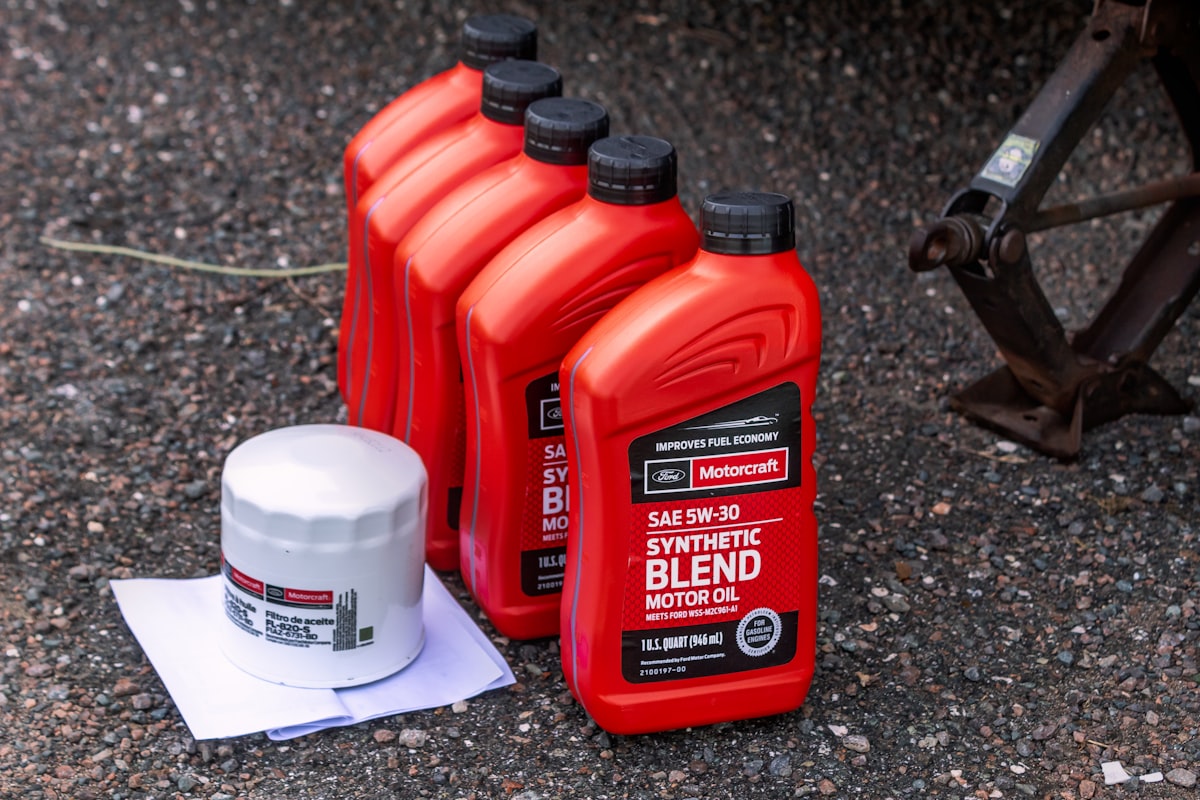
The higher 10W-40 viscosity is a safer choice for engines with some wear or unclear prior oil history, reducing the risk of minor leaks through aged seals.
Pros
- Higher viscosity suits engines with some wear
- Accessible price in the semi-synthetic segment
Cons
- Not the top pick for performance on newer cars
When buying a used car with unclear oil history, choosing a safer, higher viscosity like 10W-40 is a sensible, cautious approach.
4. Liqui Moly Molygen 5W-30

A friction-reducing additive package meets the strict ACEA ratings commonly required on newer European vehicles.
Pros
- Meets strict ACEA ratings, suits European cars
- Friction-reducing additives support modest fuel savings
Cons
- Check the exact ACEA variant before buying — several exist
For European cars requiring a specific ACEA rating in the owner's manual, Molygen is one of the few options that clearly prints the exact ACEA variant on the label.
Frequently Asked Questions
What does the number before the W mean in an oil rating?
That's the cold-start (Winter) viscosity rating. The smaller the number, the thinner the oil and the easier it flows when the engine is still cold, helping protect the engine right from startup.
How is the API rating different from the ACEA rating?
API is the American standard, commonly applied to Japanese, American, and Korean cars. ACEA is the European standard, often required specifically for European cars, especially those with complex emissions systems.
Can I use oil with a higher API rating than recommended?
Yes, newer API ratings are typically backward-compatible with older ones. However, avoid using a lower rating than recommended, as it may not meet the engine protection requirements.
Final Verdict
Reading the symbols on an oil label isn't hard — it comes down to three things: SAE viscosity, API rating, and ACEA rating if your car requires it. Once you understand these, you can confidently cross-check any bottle on the shelf without relying on advice from whoever's behind the counter.
Three Symbols Worth Remembering
SAE (e.g. 5W-30): describes viscosity at low temperature and at operating temperature. This is the first spec to cross-check against your owner’s manual.
API (e.g. SP, SN): the American quality standard — the later the letter falls in the alphabet (S…P is newer than S…N), the better it meets modern engine-protection requirements.
ACEA (e.g. C3, A3/B4): the European standard, important for European cars since it ties directly to specific emissions-system compatibility requirements.
A Quick Cross-Check Tip For the Shelf
Snap a photo of, or memorize, the recommended viscosity and API/ACEA rating from your owner’s manual before you go shopping. Once there, just cross-check those three numbers/symbols on the bottle — ignore marketing terms like “premium” or “breakthrough technology,” which aren’t official technical specs.