Prices are shown for reference only and may vary by retailer. Always check the latest price before buying.
| Product | Award | Rating | Best For | Price |
|---|---|---|---|---|
| Castrol EDGE 5W-30 | Best Overall | 4.7/5 | Newer direct-injection turbo engines | Check latest |
| Mobil 1 ESP 5W-30 | Best for European Cars | 4.6/5 | European cars with emissions filters | Check latest |
| Liqui Moly Top Tec 4200 5W-30 | Best for Long-Term Durability | 4.5/5 | Cars needing extended oil-change intervals | Check latest |
| Motul 8100 Eco-lite 5W-30 | Best for Fuel Economy | 4.4/5 | Drivers prioritizing fuel economy | Check latest |
1. Castrol EDGE 5W-30

Fluid Titanium technology helps the oil cling more tightly to metal surfaces under high pressure, keeping viscosity stable during sustained high-temperature driving.
Pros
- Strong thermal stability under demanding conditions
- Broad compatibility with many turbo engines
- Easy to find at most auto parts retailers
Cons
- Priced higher than semi-synthetic oils in the same segment
- Fewer viscosity options beyond 5W-30/5W-40
EDGE is Castrol's flagship line and is recommended by many dealership service centers for newer vehicles. Thermal stability is its clearest strength, particularly for cars that see long stretches of hot-weather driving.
2. Mobil 1 ESP 5W-30
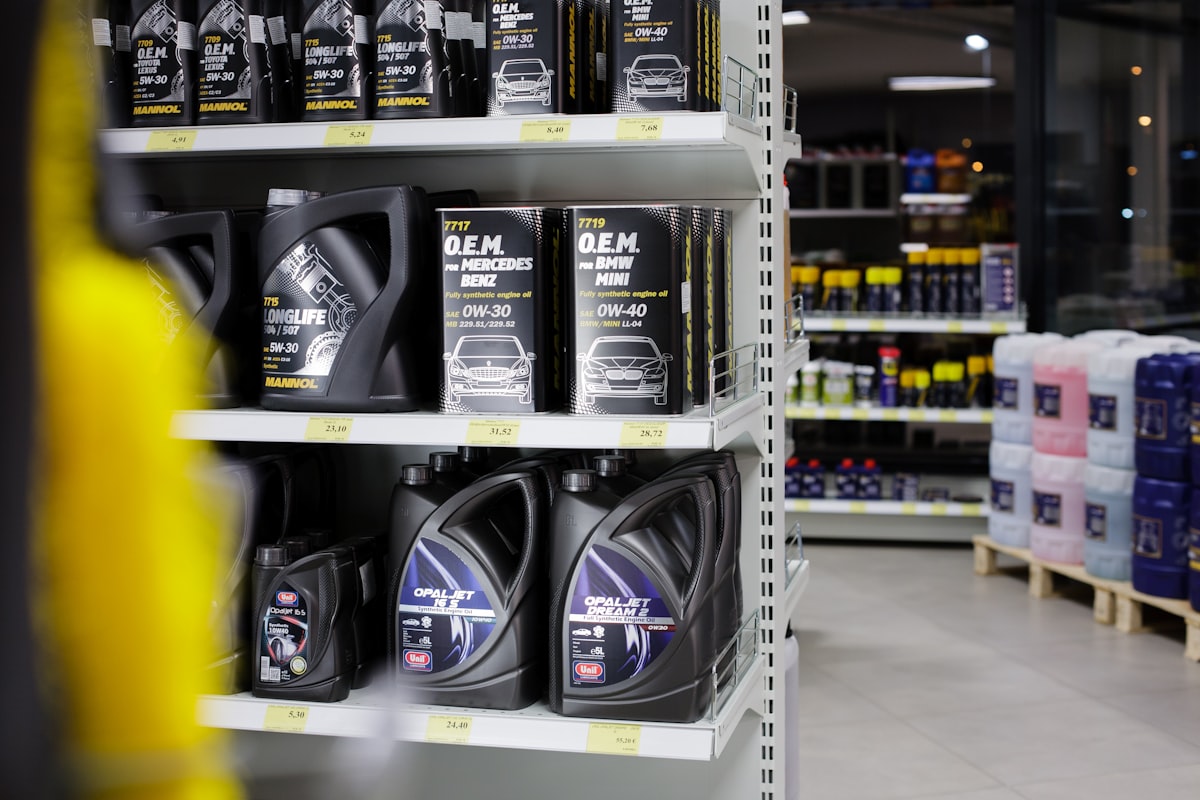
Rated ACEA C2/C3, engineered specifically for compatibility with the emissions systems on European vehicles, reducing the risk of filter clogging over time.
Pros
- Meets strict ACEA C2/C3 standards
- Strong protection for emissions systems
- Consistent performance across change intervals
Cons
- Priced at the higher end of the full-synthetic segment
- Worth double-checking the exact ACEA variant before buying — several exist
For European cars requiring a specific ACEA rating, Mobil 1 ESP is a safe pick since it's developed to meet those exact standards rather than just a general API rating.
3. Liqui Moly Top Tec 4200 5W-30

A low-SAPS formulation reduces sulfated ash, well-suited to modern engines with diesel particulate filters or catalytic converters sensitive to ash buildup.
Pros
- Low-SAPS formula, friendly to emissions filters
- Maintains stable performance across long change intervals
- Widely trusted by independent European shops
Cons
- Less common than Castrol or Mobil in some markets
- Double-check ACEA compatibility for non-European vehicles
Top Tec 4200 stands out for its low-SAPS formula, an important factor if your car has a sensitive emissions filter — something many other synthetic oils don't specifically optimize for.
4. Motul 8100 Eco-lite 5W-30

Viscosity is tuned to reduce internal engine friction, aimed at fuel efficiency rather than maximum high-speed performance.
Pros
- Reduces friction, supports fuel savings
- Well-suited to daily city driving
- Competitively priced in its segment
Cons
- Not the optimal choice for high-performance vehicles
- Fuel-saving benefit depends on matching the recommended vehicle type
If fuel economy for daily city driving is your top priority, Motul's Eco-lite line is a reasonable choice, though it's not the strongest pick if pure performance is what you're after.
Frequently Asked Questions
Is full-synthetic oil really necessary for every car?
Not necessarily. Older cars with simpler, non-turbo engines can run fine on semi-synthetic oil. Full-synthetic delivers the clearest benefit on modern, turbocharged engines or vehicles driven in demanding conditions.
Can I switch from conventional oil to full-synthetic mid-life?
Yes. Full-synthetic oil is safe to use on most engines that previously ran conventional oil. There's no technical risk in switching, as long as you choose the recommended viscosity.
Does full-synthetic oil extend the change interval?
Yes, often up to 8,000–10,000 km compared to 3,000–5,000 km for conventional oil, but you should still cross-check with your manufacturer's recommendation and your real driving conditions.
Final Verdict
All four oils above are trustworthy full-synthetic options, differing mainly in what they're optimized for — maximum protection, emissions compatibility, long-interval durability, or fuel economy. For most newer cars under normal driving conditions, Castrol EDGE 5W-30 remains the most balanced pick.
A Quick Selection Guide
Before picking from the comparison above, nail down two things: the SAE viscosity your owner’s manual recommends (like 5W-30), and the minimum API or ACEA rating your manufacturer requires. Any full-synthetic oil meeting both of these is a technically safe choice — the rest comes down to personal budget and priorities.
If your car has an emissions filter (DPF, GPF) or a sensitive catalytic converter, prioritize oils labeled “low-SAPS” or rated ACEA C2/C3 — a detail many drivers overlook but one that directly affects the lifespan of your emissions system.